These changes will make age-related driving tests for seniors more important. As the population gets older and the roads get more complicated, the federal and provincial governments are thinking about how to keep older drivers safe while also giving them more freedom and mobility.
These changes don’t mean that seniors will automatically have to give up their licenses. Instead, the goal is to make sure that drivers of all ages, especially those over a certain age, continue to meet minimum safety standards by doing targeted checks at renewal time. For many older people, this will mean more steps to check that weren’t needed before.
This article talks about the changes that will happen in 2026, who will be affected, what kinds of driving tests seniors may need to pass, how the rules are different in each province, and how older drivers can get ready ahead of time for the renewal process.

Why Canada is changing the rules for seniors who want to get their licenses renewed
There are more seniors in Canada than any other age group. Millions of Canadians over the age of 65 need to drive to see the doctor, buy groceries, and keep in touch with friends and family. Transportation officials have also noticed that more age-related risk factors are making driving less safe and raising new concerns about road safety concerns.
Some of the main reasons for the changes in 2026 are:
- More older people are driving into their 70s and 80s because people are living longer.
- Health issues such as losing your vision, having slower reaction times, and going crazy
- Roads that are harder to navigate because of better traffic systems and car technology
- The need for safety checks that are based on facts, not age
Instead of just taking away licenses based on age and putting in automatic age-based restrictions, Canada looks at functional ability and finds risks early on.
What the Changes to License Renewal in 2026 Mean for Older People
Starting in 2026, seniors in many provinces who want to renew their driver’s licenses will have to go through a more organized screening process system. These tests are not meant to punish older people or take away their right to be independent. They are meant to see if a driver can still drive safely today.
Here are some of the most important changes that are happening or being made:
- When older drivers renew their licenses, they have to have their vision checked.
- Medical questionnaires filled out by the driver and, in some cases, their doctor
- Some age groups need to take cognitive or functional tests.
- Seniors can now renew their licenses in person instead of by mail or online.
- Possible road tests for drivers who are flagged during screening
The provincial level is in charge of licensing, so the exact requirements will be different in each province and territory and will depend on the rules of the local transportation authority.
When the New Rules Start Age Limits
Most of the changes to the renewal process are for drivers 70 and older, but in some places, checks are stricter starting at 75 or 80. These changes are based on higher age-based screening thresholds and are in line with new public safety standards.
Here are some common age limits:
- Age 65 More reminders to renew and requests for information
- Age 70 to 74 Required vision tests and medical self-declarations
- People over 75 will have more medical reviews and may need to go in for an evaluation.
- 80 years old and up More likely to have a cognitive test or a road test
These limits are based on medical studies that show that as people get older, certain risk factors become more common. But many older people can still drive safely long after these points and get around on their own every day.
Vision tests are now required.
One of the most consistent changes across Canada is that vision tests for older drivers are getting stricter. You need to be able to see well to read road signs, judge distances, and respond to dangers while keeping your road sign visibility and distance judgment skills sharp.
Under the new rules, seniors may have to:
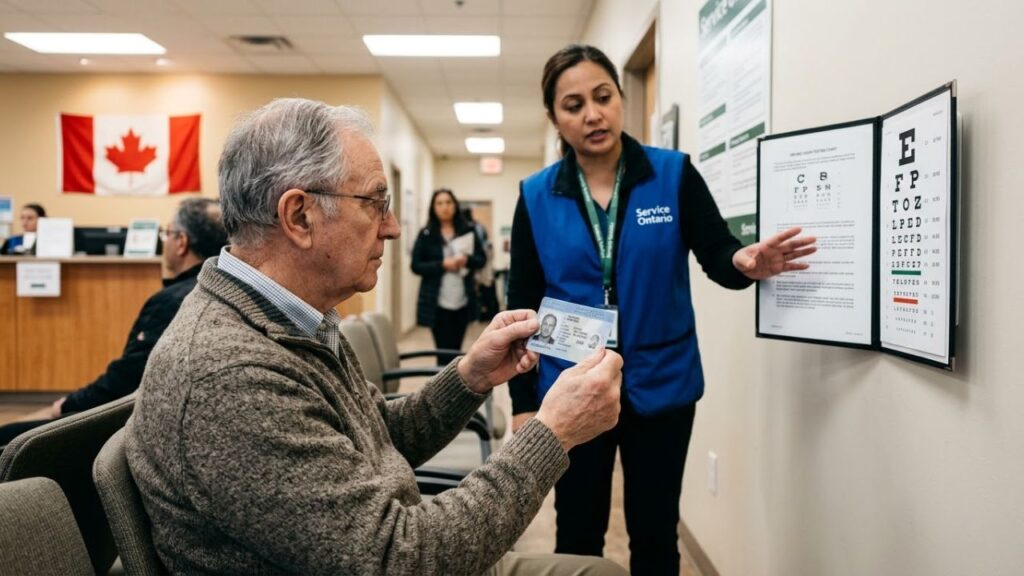
- You have to take a vision test in person every time you renew.
- Meet the minimum standards for peripheral vision and visual acuity
- If they need to, they should wear glasses or contacts and have that written down on their license.
Drivers who don’t pass the first screening may need to get a full vision report from an optometrist or ophthalmologist before they can renew their license and finish the required follow-up medical review.
Medical reports and statements from doctors
One of the main goals of the changes to the renewal process in 2026 is to make sure that people are healthy enough to drive. Seniors may be asked to fill out medical forms about conditions that could make it harder for them to drive and affect their overall driving performance today.
These questionnaires typically inquire about:
- Issues with hearing and seeing
- The state of the nervous system
- The health of the heart and blood vessels
- Taking care of diabetes
- Drugs that might make you sleepy or slow down how quickly you react
Older people sometimes need a doctor to write a medical report for them. Doctors don’t have to automatically take away licenses; they just have to make sure that all conditions are being handled correctly according to current medical fitness standards.
Checking for cognitive and functional skills
Some provinces are requiring older drivers to take cognitive or functional tests. These aren’t full medical exams; they’re quick tests that look for problems that could make it hard to drive and signs of early cognitive decline.
Some things that could be part of screening are:
- Simple tests of memory or attention
- Tests to see how quickly you can react
- Tasks for solving problems related to driving
Most of the time, only drivers who don’t do well on the screening test are sent for more tests or a road test to make sure they can drive safely in real life situations.
When You Might Have to Take a Road Test
Many people are worried that seniors will have to take a road test right away, but that’s not true. But if there are problems with the renewal process, you may have to take a road test as part of a more in-depth safety check process.
If you have to take a road test,
- The results of the cognitive or vision screening are very close.
- A medical report makes people worry about safety.
- In the past there have been accidents where someone was to blame.
- The driver has broken the law in a lot of big ways.
It’s more important to be able to drive well in the real world than to be perfect on a road test. Many older people pass without any problems and keep driving on their own in the community.

The rules about how often you have to renew your license are changing.
In 2026, seniors will have to renew their licenses more often, which is another big change. Some provinces make older drivers renew their licenses more often than younger drivers do. This is so that their health can be checked more often and their driving skills can be reassessed.
Here are some common schedules for renewing:
- For drivers under 65 every five years
- Every two to three years for drivers over 70
- In some places drivers over 80 have to renew their licenses every year or every other year.
When renewals happen more often, authorities can keep a closer eye on changes in health or ability and keep an eye on road safety at the same time.
What Makes Each Province in Canada Unique
Because each province is in charge of issuing driver’s licenses, the rules are different in each one. This means that each province has its own rules for renewing licenses and safety policies.
Ontario
Drivers in Ontario who are 80 or older already have to get medical and vision tests. In 2026, there could be more cognitive testing and new ways to renew under improved senior driver programs.
British Columbia
British Columbia places a lot of value on being healthy enough to drive. According to their doctors, seniors may have to follow up more closely with doctor-based reporting requirements.
Alberta
Alberta is focusing on doctors reports and stricter rules for renewing licenses in person may make it harder for older drivers to do so.
Quebec
Quebec puts a lot of weight on medical tests and when seniors renew their licenses, they may have to take more functional tests as part of expanded functional assessment measures.
Other provinces and territories are checking their rules to make sure they are in line with national safety research and transportation policies that are based on evidence based policies.
Why These Changes Aren’t About Punishment
A lot of older people are afraid that these rules will make them lose their licenses. The real goal is to find risks early, not to make unfair age-based rules or put blanket restrictions on everything.
This new way has these good things:
- Helping older people get ready for problems before they happen
- Allowing safe drivers to drive for longer periods of time
- Making it simple to reevaluate and improve things
- Keeping all of Canada’s roads safer for everyone
Many seniors who have to take extra tests can still drive without any problems and keep their independence when it comes to getting around.
How Older People Can Prepare for the Changes in 2026
Being ready can help the process of renewing go more smoothly and with less stress, and it can also boost your confidence during the renewal process.
Here are some helpful steps:
- Getting your eyes checked regularly
- Working with doctors to deal with chronic illnesses
- Keeping medical records up to date
- Reviewing the rules of the road and the signs
- Practice your driving skills if you’re feeling less sure of yourself.
Taking the initiative lowers the chances of problems coming up when it’s time to renew your license and helps you keep your license.
What Happens When a License Isn’t Renewed
If a senior doesn’t meet the requirements for renewal, there are usually options that let them drive in a different way and have structured chances to be reassessed.
- A temporary suspension with a way to review it later.
- Limited licenses that let you drive during the day or in your area.
- Referrals to programs that help people drive better
- Appealing or getting a second opinion from a doctor
Most of the time, losing your license is the last thing you want to do, and it’s a last resort for safety.
The Bigger Impact on Road Safety in Canada
Officials think that these changes will make the roads safer for everyone, not just older people. Bans based on ability are better than bans based on age, according to research. This supports policies that are fair and based on evidence.
Canada wants to do this by focusing on how well people can do things:
- Cut down on the number of crashes that don’t have to happen.
- Help people stay safe as they get older
- Keep older people active
- Make rules that are always fair and the same.
The changes to the process for renewing a license in 2026 show that the system is moving away from automatic renewals and toward smarter, safer tests. Seniors who stay healthy and pay attention while driving are likely to keep driving without any problems and stay independent for a long time ahead.
The most important thing is to be ready. Being aware, taking care of your health ahead of time, and being sure about renewal can make the process easy and make sure that the renewal goes smoothly.
These changes are meant to keep everyone safe on the road as Canadas population gets older. They also respect the independence and dignity of older drivers and protect public road safety standards.