Canadians can save and invest easily and without paying taxes with Tax-Free Savings Accounts (TFSAs). Still, a lot of Canadians are having trouble with unexpected penalties for putting too much money into their TFSA. Even things that are out of their control can cause big tax bills, which can be frustrating and confusing.
Recent events show how easy it is for Canadians to get caught up in TFSA rules, even when they mean well. Anyone with a TFSA needs to know how these penalties come about and why the Canada Revenue Agency (CRA) is so strict about them.
When simple mistakes lead to tax problems
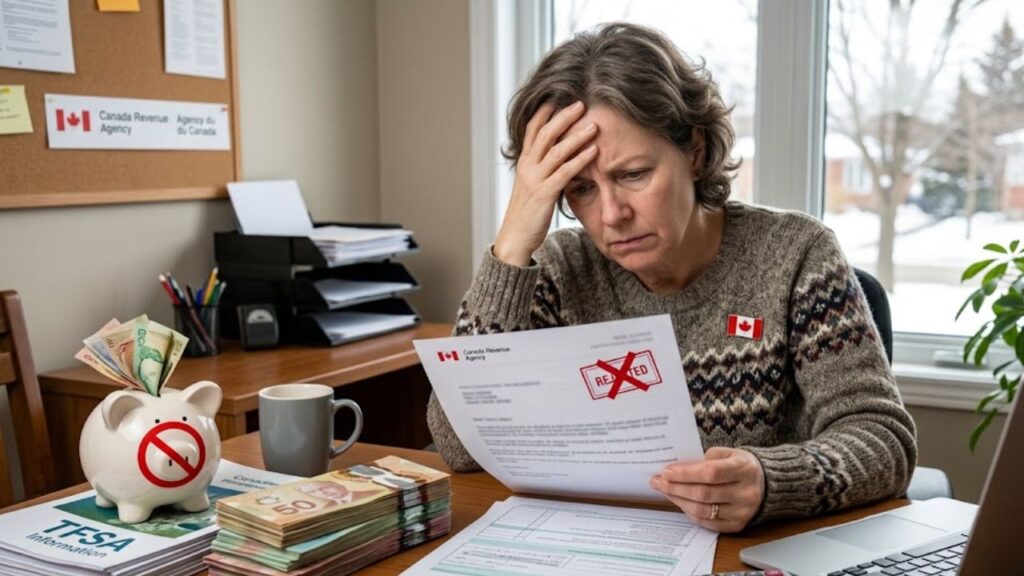
Think about a recent case where an 86-year-old woman got into trouble with TFSA overcontribution penalties because the bank made a mistake. The TFSA of her deceased spouse was given to her as the new holder. But because of a reporting error, the transfer was counted as a new contribution, which led to penalties for overcontributing.

She was going to have to pay more taxes, even though it wasn’t her fault. These kinds of stories show how TFSA rules can be hard to understand and can lead to unexpected debts.
TFSA Overcontribution Disputes Going to Court
Sometimes, cases of overcontribution go to court. One case was a Calgary taxpayer who fought the CRA’s refusal to give them discretionary relief. The taxpayer opened several TFSAs in 2021, but didn’t know that the contributions were too high.
The CRA sent a notice of overcontribution for 2021 in May 2022. It said that there would be a 1% penalty on any extra amounts until they were taken out. Sadly, the taxpayer never got the notice because the CRA had an old mailing address for him.
Why It’s Important to Tell the CRA About Your New Address
One useful tip: if you move, you must tell the CRA your new address. You can do this in a number of ways, including online, by phone, by mail, or when you file your taxes with a tax preparer or an authorized EFILE service. But you can’t use NETFILE to change your address. If you skip this step, you might miss important notices about overcontributions.
Big Overcontributions Mean Big Penalties
The Calgary taxpayer’s TFSA overcontributions went up a lot over the next two years, to about $142,000 in 2022 and $162,000 in 2023. This meant that they had to pay about $10,000 more in taxes and fines in 2022 and $25,000 more in 2023.
In September 2023, he called the CRA for help, saying he was having trouble with money, was late in finding out about it, and couldn’t take out money because of investment losses. The CRA said no to his request for help, even though he explained why and tried to do the right thing. They said it was his job to keep records and fix overcontributions quickly.
Learning about CRA Discretionary Relief
The CRA can only waive or cancel all or part of a TFSA overcontribution penalty if two things happen:

- The extra contribution must have been the result of a reasonable mistake.
- The extra contribution needs to be fixed right away.
The CRA can’t help a taxpayer unless they take back the extra contributions or fix the mistake in some other way, even if they have a good reason for the mistake.
Federal Court Confirms CRA’s Strict Rules
The taxpayer went to Federal Court to say that he couldn’t fix the overcontributions because his TFSA accounts were empty because of losses in the stock market.
The court’s review was mostly about whether the CRA’s choice was fair. The judge said that according to the Income Tax Act, fixing the overcontribution is a requirement for getting tax relief. This law still stands even if there are circumstances that make correction impossible.
Why you have to correct before you can get help
The judge made it clear that the CRA cannot skip the correction requirement. The taxpayer’s request for help without a correction was basically asking the CRA to break the law. Because of this, the refusal of relief was upheld, and the penalty for overcontribution stayed in place.
A Problem That Keeps Coming Up in Canadian Tax Policy
This is not the only problem. A federal judge called the TFSA overcontribution rules a “perpetual tax trap” in a 2025 case, saying they didn’t seem to fit with what Parliament wanted. These kinds of cases show how the law and the real world can be at odds when Canadians are managing their TFSAs.
Some experts say that lawmakers should change the rules so that taxpayers don’t have to pay penalties when they take all their money out of their TFSAs. They say that it’s not fair to punish people for things they can’t control.
Full breakdown of CDB, CCB, and Provincial Child Benefits: Government Benefit Payments Coming This Week
Important Things for TFSA Holders to Know
- Keep track of contributions Be careful: Always know how much room you have in your TFSA and keep an eye on transfers, especially when it comes to inheritance or succession.
- Change Your Address: Make sure the CRA can get in touch with you so you don’t miss important notices.
- Take Action Right Away on Mistakes: Before discretionary relief can be considered, the law says that overcontributions must be fixed right away.
- Get Professional Help: Tax professionals can help you understand TFSA rules and avoid expensive fines.
Even if you make a mistake or can’t help it, putting too much money into a TFSA can get you in a lot of trouble. The best ways to avoid getting stuck in this “perpetual tax trap” are to be aware, keep good records, and act quickly.